

Brad Karp is back in law school. The former Paul, Weiss chair, you’ll recall, became notorious in the world of Biglaw when, under Karp’s leadership, the firm became the first to cut a deal with the Trump administration, agreeing to eliminate DEI programs and pledge $40 million in pro bono services to Trump initiatives in exchange for relief from an executive order targeting the firm. And the hits just kept coming: Karp stepped down in February after the Epstein files revealed a relationship with the late sex trafficker that went well beyond the firm’s carefully maintained “adverse parties” talking point. But he isn’t hiding under a rock and he recently appeared as a guest in Harvard Law School professor Annette Gordon-Reed’s “Legal Professions” course. And if you were hoping Karp had developed some new self-awareness well… not exactly.
Let’s take the Trump deal first, since Gordon-Reed apparently gave Karp some cover on the Epstein front (more on that in a moment).
According to the Harvard Crimson, Karp told students that Paul, Weiss partners unanimously agreed to attempt a settlement with the Trump administration because of concerns that other major firms would poach the firm’s clients and partners. This is, at bottom, the same finger-pointing we saw when his internal email was published, blame the competitors, not the cowardice. The partners were scared of being picked clean, so they kissed the ring. Got it.
Karp also told students he had considered resigning from leadership over the deal but stayed on at his wife’s urging. Touching. He also apparently argued that only firms that failed to settle ended up in court with the administration.
Here’s the thing about that: the firms that fought back in court are winning.
Perkins Coie, WilmerHale, Jenner & Block, Susman Godfrey — they lawyered up and pushed back against executive orders that federal judges have repeatedly found unconstitutional. The firms that took the principled stand and let the courts do what courts are supposed to do are doing just fine. So when Karp frames the capitulation as the pragmatic path, he’s doing so in a world where the evidence increasingly suggests the opposite was true. Paul, Weiss remains the cautionary tale; the firm that surrendered first, lost a wave of litigators, watched partner after partner head for the exits, and set the template that made it easier for every subsequent firm to fold.
And yet, here’s Karp at Harvard Law telling a room full of future lawyers that fighting a winning battle in court is the real problem. Interesting interpretation.
Now, about the Epstein questions — or rather, the lack thereof. Gordon-Reed told students there were “no limits on questions save for questions involving his interactions with Epstein on behalf of firm clients.” That’s, erm, quite the carve out.
Listen, a Legal Professions course is a fine place to discuss the limits of professional judgment, the pressures of institutional leadership, and what it looks like when a lawyer’s personal conduct becomes a matter of public concern. But threading that needle by preemptively taking Epstein off the table means students were engaging with a curated version of Karp’s story, not the whole one.
To be clear, what the Epstein files showed was not a picture of arm’s-length lawyering. There were fawning emails. There were social engagements. There was Karp asking Epstein to help his son get a job on a Woody Allen production. There was a 2015 exchange in which Epstein asked Karp about revoking a woman’s visa and Karp replied, “Both good ideas; will work on this.” And there were 2019 emails in which Karp reviewed a draft filing related to Epstein’s plea deal — praising arguments that characterized the sex trafficking victims as having strategically “lied in wait” — which is, to put it mildly, not what you do for someone you’re adverse to.
Not all the students were satisfied with the Epstein embargo. “I think Mr. Karp’s association with this University and its leadership from the highest levels is very difficult to square away with its stated values of egalitarianism and respect for all individuals,” third-year student Jackson S. Faulkner told the Crimson. “Anyone who helps try to deport somebody on behalf of a private individual to cover the sexual abuse case, as the records in the Epstein files indicate, should cause anyone serious alarm.”
And one student was able to lodge their protest in real time. Throughout the Zoom session, someone projected a photo of Jeffrey Epstein on their laptop — positioning it in view of the camera — in silent protest of Karp’s presence. It’s the 2026 version of the “For Trump?” heckle at the New York Bar Foundation gala, and honestly, that heckler also had a point.

For a man who spent nearly two decades atop one of the most prestigious law firms in the world, who cultivated a reputation as a giant of the profession, who once spoke grandly about moral courage, being reduced to the guy someone silently Epstein-posts at on a Zoom call is a remarkable fall.

Kathryn Rubino is a Senior Editor at Above the Law, host of The Jabot podcast, and co-host of Thinking Like A Lawyer. AtL tipsters are the best, so please connect with her. Feel free to email her with any tips, questions, or comments and follow her on Twitter @Kathryn1 or Bluesky @Kathryn1
The post Brad Karp Takes His Epstein-Stained Résumé To Harvard Law appeared first on Above the Law.
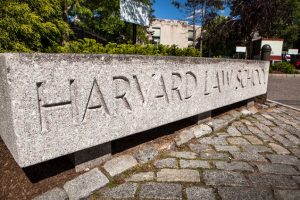
Brad Karp is back in law school. The former Paul, Weiss chair, you’ll recall, became notorious in the world of Biglaw when, under Karp’s leadership, the firm became the first to cut a deal with the Trump administration, agreeing to eliminate DEI programs and pledge $40 million in pro bono services to Trump initiatives in exchange for relief from an executive order targeting the firm. And the hits just kept coming: Karp stepped down in February after the Epstein files revealed a relationship with the late sex trafficker that went well beyond the firm’s carefully maintained “adverse parties” talking point. But he isn’t hiding under a rock and he recently appeared as a guest in Harvard Law School professor Annette Gordon-Reed’s “Legal Professions” course. And if you were hoping Karp had developed some new self-awareness well… not exactly.
Let’s take the Trump deal first, since Gordon-Reed apparently gave Karp some cover on the Epstein front (more on that in a moment).
According to the Harvard Crimson, Karp told students that Paul, Weiss partners unanimously agreed to attempt a settlement with the Trump administration because of concerns that other major firms would poach the firm’s clients and partners. This is, at bottom, the same finger-pointing we saw when his internal email was published, blame the competitors, not the cowardice. The partners were scared of being picked clean, so they kissed the ring. Got it.
Karp also told students he had considered resigning from leadership over the deal but stayed on at his wife’s urging. Touching. He also apparently argued that only firms that failed to settle ended up in court with the administration.
Here’s the thing about that: the firms that fought back in court are winning.
Perkins Coie, WilmerHale, Jenner & Block, Susman Godfrey — they lawyered up and pushed back against executive orders that federal judges have repeatedly found unconstitutional. The firms that took the principled stand and let the courts do what courts are supposed to do are doing just fine. So when Karp frames the capitulation as the pragmatic path, he’s doing so in a world where the evidence increasingly suggests the opposite was true. Paul, Weiss remains the cautionary tale; the firm that surrendered first, lost a wave of litigators, watched partner after partner head for the exits, and set the template that made it easier for every subsequent firm to fold.
And yet, here’s Karp at Harvard Law telling a room full of future lawyers that fighting a winning battle in court is the real problem. Interesting interpretation.
Now, about the Epstein questions — or rather, the lack thereof. Gordon-Reed told students there were “no limits on questions save for questions involving his interactions with Epstein on behalf of firm clients.” That’s, erm, quite the carve out.
Listen, a Legal Professions course is a fine place to discuss the limits of professional judgment, the pressures of institutional leadership, and what it looks like when a lawyer’s personal conduct becomes a matter of public concern. But threading that needle by preemptively taking Epstein off the table means students were engaging with a curated version of Karp’s story, not the whole one.
To be clear, what the Epstein files showed was not a picture of arm’s-length lawyering. There were fawning emails. There were social engagements. There was Karp asking Epstein to help his son get a job on a Woody Allen production. There was a 2015 exchange in which Epstein asked Karp about revoking a woman’s visa and Karp replied, “Both good ideas; will work on this.” And there were 2019 emails in which Karp reviewed a draft filing related to Epstein’s plea deal — praising arguments that characterized the sex trafficking victims as having strategically “lied in wait” — which is, to put it mildly, not what you do for someone you’re adverse to.
Not all the students were satisfied with the Epstein embargo. “I think Mr. Karp’s association with this University and its leadership from the highest levels is very difficult to square away with its stated values of egalitarianism and respect for all individuals,” third-year student Jackson S. Faulkner told the Crimson. “Anyone who helps try to deport somebody on behalf of a private individual to cover the sexual abuse case, as the records in the Epstein files indicate, should cause anyone serious alarm.”
And one student was able to lodge their protest in real time. Throughout the Zoom session, someone projected a photo of Jeffrey Epstein on their laptop — positioning it in view of the camera — in silent protest of Karp’s presence. It’s the 2026 version of the “For Trump?” heckle at the New York Bar Foundation gala, and honestly, that heckler also had a point.
For a man who spent nearly two decades atop one of the most prestigious law firms in the world, who cultivated a reputation as a giant of the profession, who once spoke grandly about moral courage, being reduced to the guy someone silently Epstein-posts at on a Zoom call is a remarkable fall.
Kathryn Rubino is a Senior Editor at Above the Law, host of The Jabot podcast, and co-host of Thinking Like A Lawyer. AtL tipsters are the best, so please connect with her. Feel free to email her with any tips, questions, or comments and follow her on Twitter @Kathryn1 or Bluesky @Kathryn1