

The shadow docket strikes again.
Yesterday, in an unsigned per curiam opinion, the Supreme Court handed the Trump administration an emergency stay letting it move forward with the president’s March executive order overhauling how mail-in ballots get administered — the one directing Homeland Security to build state citizenship lists, ordering DOJ to prioritize prosecuting election officials who hand ballots to the “wrong” people, and telling the Postal Service to stop delivering mail ballots to anyone not on a federally approved list. A district court in Massachusetts held Sections 2 and 3 of the order ultra vires. The First Circuit declined to stay that injunction. And now, over the dissents of the Court’s three liberals, the majority has reached in to do what the shadow docket does best: swoop in the moment a lower court rules against the Trump administration and swat the ruling away.
The majority noted they weren’t deciding “whether any measure taken by the Government to implement the Order will necessarily be lawful.” They instead agreed with the DOJ’s position that the blue states challenging the order sued too early — that they had to wait for the Postal Service to actually start implementing a policy everyone can see coming before they’d be allowed into court.
Mail-in voting has been Trump’s white whale since his 2020 loss. And since he’s spent his entire second term treating the federal government as an instrument for settling Trump family business, of course the extremely popular way for millions of Americans to exercise their right to vote got the questionably constitutional EO treatment.
Justice Sotomayor, joined by Justice Kagan, dissented, and got right to the internal contradiction at the heart of the government’s position: the administration insisted its mail-in changes were too speculative and distant for the states to challenge, while simultaneously insisting it needed emergency relief right now to implement those same changes before November. As Sotomayor put it, “the Government cannot have it both ways.”
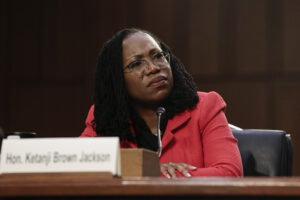
But it was Justice Ketanji Brown Jackson who wrote separately and lit the thing on fire.
Jackson’s central point is the one the majority worked hardest to avoid: you can’t be irreparably harmed by an injunction stopping you from doing something you have no legal authority to do in the first place. The Constitution assigns elections to the states, and the president has no express authority over how they’re run. So, um, where’s the harm exactly? As Jackson wrote, the government’s irreparable-harm argument is “just another species of the far-fetched contention that the President must be injured whenever he is prevented from doing as he wishes.”
And she was just getting warmed up. Here’s how she framed what the majority actually did:
This ruling violates well-established precedents concerning this Court’s equitable discretion and needlessly injects chaos and uncertainty into the upcoming midterm elections. It also lets another shoe drop in the Kafkaesque nightmare that our precedents have been steadily creating for certain plaintiffs who seek to bring election-related challenges.
That nightmare has a specific shape. The Court held years ago in Purcell that election challenges can come too late. Today’s revelation, Jackson wrote, is that “such claims can also come too early—never mind that an election is looming and related harms are presently occurring. Never mind, too, that the Government (which controls the timing of proposed and final rules) can easily game the system.” Too late if you wait, too early if you don’t, and, as she noted elsewhere in the dissent, only the Court knows which is which.
On the majority’s theory that the states had to wait, Jackson dubbed it a “catch-me-if-you-can” approach to pursuing the president’s agenda. Under that regime, she explained, the executive “can intentionally act in harmful ways that violate the law, decline to defend the legal merits of its unlawful actions, and nevertheless put challengers on the defensive,” dragging the unlawful conduct out for as long as possible. She called it what it is: “a noxious litigation strategy that should be a red flag for courts.”
She closes with some real fury behind the Court’s process:
When the Government’s obvious goal is to interfere with the Plaintiff States’ practices and prerogatives in a manner that the Constitution does not authorize, it is both a serious legal error and a grave misuse of our equitable emergency powers to let the Executive proceed even one step further.
The emergency docket’s growing prominence in MAGA politics has become standardized by this point. A lower court does the work and hands an “L” to the Trump administration. And then the conservative majority reaches for the emergency docket to hand Trump the win without full briefing or arguments. A recent Court Accountability analysis clocked the administration’s success rate at this Court at a staggering 84%, a disturbing percentage through exactly these kinds of orders.
Earlier: SCOTUS Justices Air Internal Debate Over Shadow Docket At Public Event
Supreme Court To Lower Courts: Ignore Actual Binding Precedent, Follow Our Unexplained Shadow Docket Vibes Instead
Amy Coney Barrett Then: ‘Read The Opinion!’ ACB Now: Inappropriate To Expect Supreme Court To Explain Decisions

Kathryn Rubino is a Senior Editor at Above the Law, host of The Jabot podcast, and co-host of Thinking Like A Lawyer. AtL tipsters are the best, so please connect with her. Feel free to email her with any tips, questions, or comments and follow her on Twitter @Kathryn1 or Bluesky @Kathryn1
The post SCOTUS Shadow Docket Hands Trump His Mail-In Ballot Wish, And Justice Jackson Is Having None Of It appeared first on Above the Law.
The shadow docket strikes again.
Yesterday, in an unsigned per curiam opinion, the Supreme Court handed the Trump administration an emergency stay letting it move forward with the president’s March executive order overhauling how mail-in ballots get administered — the one directing Homeland Security to build state citizenship lists, ordering DOJ to prioritize prosecuting election officials who hand ballots to the “wrong” people, and telling the Postal Service to stop delivering mail ballots to anyone not on a federally approved list. A district court in Massachusetts held Sections 2 and 3 of the order ultra vires. The First Circuit declined to stay that injunction. And now, over the dissents of the Court’s three liberals, the majority has reached in to do what the shadow docket does best: swoop in the moment a lower court rules against the Trump administration and swat the ruling away.
The majority noted they weren’t deciding “whether any measure taken by the Government to implement the Order will necessarily be lawful.” They instead agreed with the DOJ’s position that the blue states challenging the order sued too early — that they had to wait for the Postal Service to actually start implementing a policy everyone can see coming before they’d be allowed into court.
Mail-in voting has been Trump’s white whale since his 2020 loss. And since he’s spent his entire second term treating the federal government as an instrument for settling Trump family business, of course the extremely popular way for millions of Americans to exercise their right to vote got the questionably constitutional EO treatment.
Justice Sotomayor, joined by Justice Kagan, dissented, and got right to the internal contradiction at the heart of the government’s position: the administration insisted its mail-in changes were too speculative and distant for the states to challenge, while simultaneously insisting it needed emergency relief right now to implement those same changes before November. As Sotomayor put it, “the Government cannot have it both ways.”
But it was Justice Ketanji Brown Jackson who wrote separately and lit the thing on fire.
Jackson’s central point is the one the majority worked hardest to avoid: you can’t be irreparably harmed by an injunction stopping you from doing something you have no legal authority to do in the first place. The Constitution assigns elections to the states, and the president has no express authority over how they’re run. So, um, where’s the harm exactly? As Jackson wrote, the government’s irreparable-harm argument is “just another species of the far-fetched contention that the President must be injured whenever he is prevented from doing as he wishes.”
And she was just getting warmed up. Here’s how she framed what the majority actually did:
This ruling violates well-established precedents concerning this Court’s equitable discretion and needlessly injects chaos and uncertainty into the upcoming midterm elections. It also lets another shoe drop in the Kafkaesque nightmare that our precedents have been steadily creating for certain plaintiffs who seek to bring election-related challenges.
That nightmare has a specific shape. The Court held years ago in Purcell that election challenges can come too late. Today’s revelation, Jackson wrote, is that “such claims can also come too early—never mind that an election is looming and related harms are presently occurring. Never mind, too, that the Government (which controls the timing of proposed and final rules) can easily game the system.” Too late if you wait, too early if you don’t, and, as she noted elsewhere in the dissent, only the Court knows which is which.
On the majority’s theory that the states had to wait, Jackson dubbed it a “catch-me-if-you-can” approach to pursuing the president’s agenda. Under that regime, she explained, the executive “can intentionally act in harmful ways that violate the law, decline to defend the legal merits of its unlawful actions, and nevertheless put challengers on the defensive,” dragging the unlawful conduct out for as long as possible. She called it what it is: “a noxious litigation strategy that should be a red flag for courts.”
She closes with some real fury behind the Court’s process:
When the Government’s obvious goal is to interfere with the Plaintiff States’ practices and prerogatives in a manner that the Constitution does not authorize, it is both a serious legal error and a grave misuse of our equitable emergency powers to let the Executive proceed even one step further.
The emergency docket’s growing prominence in MAGA politics has become standardized by this point. A lower court does the work and hands an “L” to the Trump administration. And then the conservative majority reaches for the emergency docket to hand Trump the win without full briefing or arguments. A recent Court Accountability analysis clocked the administration’s success rate at this Court at a staggering 84%, a disturbing percentage through exactly these kinds of orders.
Earlier: SCOTUS Justices Air Internal Debate Over Shadow Docket At Public Event
Supreme Court To Lower Courts: Ignore Actual Binding Precedent, Follow Our Unexplained Shadow Docket Vibes Instead
Amy Coney Barrett Then: ‘Read The Opinion!’ ACB Now: Inappropriate To Expect Supreme Court To Explain Decisions
Kathryn Rubino is a Senior Editor at Above the Law, host of The Jabot podcast, and co-host of Thinking Like A Lawyer. AtL tipsters are the best, so please connect with her. Feel free to email her with any tips, questions, or comments and follow her on Twitter @Kathryn1 or Bluesky @Kathryn1