The nine Biglaw firms that bent the knee to Donald Trump paid for one thing above all else: for it all to go away. Their deals came with roughly $940 million in pro bono payola for Trump-approved causes, and in exchange they thought they got peace, quiet, and nobody asking too many questions.
But reality is a harsh mistress like that.
On Monday, U.S. District Judge Amir Ali granted a key records request in the American Bar Association’s suit over the administration’s “law firm intimidation policy.” According to Bloomberg Law, the White House now has to produce the agreements it struck with Paul Weiss, Kirkland, Skadden, Latham & Watkins, Milbank, A&O Shearman, Simpson Thacher, Willkie Farr, and Cadwalader (now part of Hogan Lovells Cadwalader). It also has to hand over its communications with those nine firms, plus communications with the smaller group of firms Trump went after with executive orders.
Ali ordered the administration to share communications relating to “any possible issuance of any executive order against any law firm, or to any agreement with any law firm and the government.” He limited the request to communications that took place between the start of Trump’s second term through June 2025.
The requested communications are “directly relevant” to whether the government issued retaliatory sanction threats that would have discouraged ABA members from engaging in activity protected by the First Amendment.
These are the same deals several of the capitulating firms spent last year insisting to congressional Democrats were barely deals at all. LOL, what pro bono deals? These ones, apparently! The ones the White House is about to have to produce.
The administration has fought this every step of the way. Ali denied the government’s motion to dismiss back in April, and once discovery opened the ABA came looking for the receipts, including anything involving Boris Epshteyn and Steve Bannon. The DOJ responded by subpoenaing the law firms themselves for their Epshteyn communications, which conceded the material was relevant. Then it tried to get Susman Godfrey, the ABA’s counsel, disqualified as a witness. Ali wasn’t buying it, since the government couldn’t name a single Susman lawyer who’d actually have to testify. When Ali ordered the government to identify who drafted the Biglaw executive orders, the administration invoked presidential privilege over the names themselves. It warned that disclosure would “name and shame” them, which raises the question of what exactly they’d be ashamed of.
Which didn’t work, the judge wants to see how these deals got made.
The timing makes it worse for the firms. Democrats now control Congress, and the deals are about to get a lot more attention on the Hill. This is the same caucus that wrote to Kirkland four separate times asking what exactly the firm promised Trump and got a politely worded shrug every time. Shrugs don’t work as well against subpoena power. And it gets harder still if the White House has already produced a bunch of documents in federal court.
Earlier: The ABA Wants The White House’s Receipts On The Biglaw Executive Orders
DOJ’s Plan To Subpoena Susman Godfrey Off The ABA Case Does Not Survive Contact With A Judge
Democrats To Kirkland & Ellis: For The Fourth Time, What Exactly Did You Promise Trump?
Biglaw Firms That Cut Deals With Trump Are AWOL As Midterm Election Fights Heat Up
Kathryn Rubino is a Senior Editor at Above the Law, host of The Jabot podcast, and co-host of Thinking Like A Lawyer. AtL tipsters are the best, so please connect with her. Feel free to email her with any tips, questions, or comments and follow her on Twitter @Kathryn1 or Bluesky @Kathryn1
The post Judge Orders Trump Administration To Produce The Biglaw Deals And The Emails Behind Them appeared first on Above the Law.
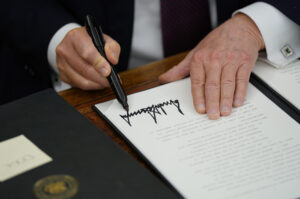
The nine Biglaw firms that bent the knee to Donald Trump paid for one thing above all else: for it all to go away. Their deals came with roughly $940 million in pro bono payola for Trump-approved causes, and in exchange they thought they got peace, quiet, and nobody asking too many questions.
But reality is a harsh mistress like that.
On Monday, U.S. District Judge Amir Ali granted a key records request in the American Bar Association’s suit over the administration’s “law firm intimidation policy.” According to Bloomberg Law, the White House now has to produce the agreements it struck with Paul Weiss, Kirkland, Skadden, Latham & Watkins, Milbank, A&O Shearman, Simpson Thacher, Willkie Farr, and Cadwalader (now part of Hogan Lovells Cadwalader). It also has to hand over its communications with those nine firms, plus communications with the smaller group of firms Trump went after with executive orders.
Ali ordered the administration to share communications relating to “any possible issuance of any executive order against any law firm, or to any agreement with any law firm and the government.” He limited the request to communications that took place between the start of Trump’s second term through June 2025.
The requested communications are “directly relevant” to whether the government issued retaliatory sanction threats that would have discouraged ABA members from engaging in activity protected by the First Amendment.
These are the same deals several of the capitulating firms spent last year insisting to congressional Democrats were barely deals at all. LOL, what pro bono deals? These ones, apparently! The ones the White House is about to have to produce.
The administration has fought this every step of the way. Ali denied the government’s motion to dismiss back in April, and once discovery opened the ABA came looking for the receipts, including anything involving Boris Epshteyn and Steve Bannon. The DOJ responded by subpoenaing the law firms themselves for their Epshteyn communications, which conceded the material was relevant. Then it tried to get Susman Godfrey, the ABA’s counsel, disqualified as a witness. Ali wasn’t buying it, since the government couldn’t name a single Susman lawyer who’d actually have to testify. When Ali ordered the government to identify who drafted the Biglaw executive orders, the administration invoked presidential privilege over the names themselves. It warned that disclosure would “name and shame” them, which raises the question of what exactly they’d be ashamed of.
Which didn’t work, the judge wants to see how these deals got made.
The timing makes it worse for the firms. Democrats now control Congress, and the deals are about to get a lot more attention on the Hill. This is the same caucus that wrote to Kirkland four separate times asking what exactly the firm promised Trump and got a politely worded shrug every time. Shrugs don’t work as well against subpoena power. And it gets harder still if the White House has already produced a bunch of documents in federal court.
Earlier: The ABA Wants The White House’s Receipts On The Biglaw Executive Orders
DOJ’s Plan To Subpoena Susman Godfrey Off The ABA Case Does Not Survive Contact With A Judge
Democrats To Kirkland & Ellis: For The Fourth Time, What Exactly Did You Promise Trump?
Biglaw Firms That Cut Deals With Trump Are AWOL As Midterm Election Fights Heat Up
Kathryn Rubino is a Senior Editor at Above the Law, host of The Jabot podcast, and co-host of Thinking Like A Lawyer. AtL tipsters are the best, so please connect with her. Feel free to email her with any tips, questions, or comments and follow her on Twitter @Kathryn1 or Bluesky @Kathryn1