

You know how when a wide receiver burns the D so badly that NFL Hall of Famer Randy Moss features the play on the ESPN segment “YOU GOT MOSSED” you know you’re in for a good time? Yeah, well that’s what happened to the Department of Justice yesterday in the District of Columbia. Except instead of a football field, it was a federal courtroom. And instead of a wide receiver, it was U.S. District Judge Randolph Moss systematically dismantling the DOJ’s central legal theory in the Comey “86 47” prosecution (in a completely different case) before the Comey trial even gets started.
You got Mossed, Todd Blanche. You got Mossed.
Here’s the background. We’ve been covering the Comey seashell saga since it began, which involves the former FBI Director posting a photo of shells on a beach arranged to read “86 47,” captioned “Cool shell formation on my beach walk,” and the Trump DOJ deciding that this constituted a federal crime. The second indictment, announced with great fanfare by acting AG Todd Blanche at a fully staged press conference, charged Comey with threatening the president, while Blanche later attempted to distance himself from the whole thing, claiming he didn’t even know the names of the prosecutors involved, a claim somewhat complicated by the fact that he’d personally introduced them by name at said press conference.
Anyway, the Comey trial isn’t until October, but the DOJ just took a significant hit it didn’t see coming.
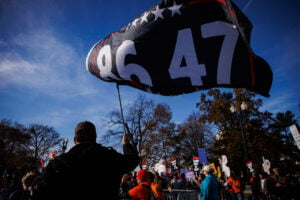
A separate case, Accountability NOW USA v. National Park Service, involved a progressive protest group that had been flying an “86 47” flag during an impeachment demonstration outside a D.C. courthouse. The Secret Service opened an investigation, and the DOJ submitted a declaration from Secret Service Deputy Director Matthew Quinn arguing the phrase was a “potential call for acts of violence directed at the President of the United States.” They tried to get the group’s protest permit pulled, birthing the instant litigation.
But Judge Moss was not impressed with the government’s legal theory.
“Although the Court recognizes the importance and difficulty of the mission of the Secret Service, the First Amendment does not permit the government to censor political speech, which no reasonable observer would view, in context, as actually conveying a threat of violence, merely because the speaker uses a phrase that, in addition to other more common meanings, has been used to refer to an act of violence,” Moss wrote, granting the group a temporary restraining order and barring the National Park Service from pulling their permit.
He went further. On what “86” actually means, the judge leaned on Merriam-Webster, which defines “86” — originating from 1930s soda-counter slang — as “to throw out,” “to get rid of,” or “to refuse service to.” While Merriam-Webster notes that some have defined the phrase as “to kill,” it does not include that definition “due to its relative recency and sparseness of use.” I’m sure Comey’s attorneys are taking copious notes.
And because the context matters, the judge found that the flag, displayed outside a courthouse during an impeachment demonstration and lacking any violent imagery, further supports the assertion that it is not a threat. Kinda like how seashells, regardless of their configuration, are difficult to see as a threat.
“In short, the record contains compelling evidence supporting Plaintiff’s contention that it displayed the flag merely to urge President Trump’s removal from office but contains no evidence supporting Defendants’ contention that the flag represented a true threat on the life or physical well-being of the President of the United States.”
Of course, as compelling as it may be, none of it is binding on the criminal court in the Eastern District of North Carolina where Comey’s case will be tried. But DOJ’s entire theory in the Comey case rests on the assertion that a reasonable person would interpret “86 47” as a threat of violence against the president, and this is… very much the opposite.
Read the full decision below.

Kathryn Rubino is a Senior Editor at Above the Law, host of The Jabot podcast, and co-host of Thinking Like A Lawyer. AtL tipsters are the best, so please connect with her. Feel free to email her with any tips, questions, or comments and follow her on Twitter @Kathryn1 or Bluesky @Kathryn1
The post DOJ Just Got Mossed On ’86 47′ Legal Theory appeared first on Above the Law.
You know how when a wide receiver burns the D so badly that NFL Hall of Famer Randy Moss features the play on the ESPN segment “YOU GOT MOSSED” you know you’re in for a good time? Yeah, well that’s what happened to the Department of Justice yesterday in the District of Columbia. Except instead of a football field, it was a federal courtroom. And instead of a wide receiver, it was U.S. District Judge Randolph Moss systematically dismantling the DOJ’s central legal theory in the Comey “86 47” prosecution (in a completely different case) before the Comey trial even gets started.
You got Mossed, Todd Blanche. You got Mossed.
Here’s the background. We’ve been covering the Comey seashell saga since it began, which involves the former FBI Director posting a photo of shells on a beach arranged to read “86 47,” captioned “Cool shell formation on my beach walk,” and the Trump DOJ deciding that this constituted a federal crime. The second indictment, announced with great fanfare by acting AG Todd Blanche at a fully staged press conference, charged Comey with threatening the president, while Blanche later attempted to distance himself from the whole thing, claiming he didn’t even know the names of the prosecutors involved, a claim somewhat complicated by the fact that he’d personally introduced them by name at said press conference.
Anyway, the Comey trial isn’t until October, but the DOJ just took a significant hit it didn’t see coming.
A separate case, Accountability NOW USA v. National Park Service, involved a progressive protest group that had been flying an “86 47” flag during an impeachment demonstration outside a D.C. courthouse. The Secret Service opened an investigation, and the DOJ submitted a declaration from Secret Service Deputy Director Matthew Quinn arguing the phrase was a “potential call for acts of violence directed at the President of the United States.” They tried to get the group’s protest permit pulled, birthing the instant litigation.
But Judge Moss was not impressed with the government’s legal theory.
“Although the Court recognizes the importance and difficulty of the mission of the Secret Service, the First Amendment does not permit the government to censor political speech, which no reasonable observer would view, in context, as actually conveying a threat of violence, merely because the speaker uses a phrase that, in addition to other more common meanings, has been used to refer to an act of violence,” Moss wrote, granting the group a temporary restraining order and barring the National Park Service from pulling their permit.
He went further. On what “86” actually means, the judge leaned on Merriam-Webster, which defines “86” — originating from 1930s soda-counter slang — as “to throw out,” “to get rid of,” or “to refuse service to.” While Merriam-Webster notes that some have defined the phrase as “to kill,” it does not include that definition “due to its relative recency and sparseness of use.” I’m sure Comey’s attorneys are taking copious notes.
And because the context matters, the judge found that the flag, displayed outside a courthouse during an impeachment demonstration and lacking any violent imagery, further supports the assertion that it is not a threat. Kinda like how seashells, regardless of their configuration, are difficult to see as a threat.
“In short, the record contains compelling evidence supporting Plaintiff’s contention that it displayed the flag merely to urge President Trump’s removal from office but contains no evidence supporting Defendants’ contention that the flag represented a true threat on the life or physical well-being of the President of the United States.”
Of course, as compelling as it may be, none of it is binding on the criminal court in the Eastern District of North Carolina where Comey’s case will be tried. But DOJ’s entire theory in the Comey case rests on the assertion that a reasonable person would interpret “86 47” as a threat of violence against the president, and this is… very much the opposite.
Read the full decision below.
Kathryn Rubino is a Senior Editor at Above the Law, host of The Jabot podcast, and co-host of Thinking Like A Lawyer. AtL tipsters are the best, so please connect with her. Feel free to email her with any tips, questions, or comments and follow her on Twitter @Kathryn1 or Bluesky @Kathryn1