
Social media started as a tool that would make it easier to connect you with your friends. By that I mean rate the women of your dorm by relative attractiveness, but let’s not get too granular here. The internet, known to everyone as a series of tubes, intended to serve the same purpose. By that I mean it was a handy little byproduct of the Cold War, but we don’t think about it that way. We largely think about the world wide web era of the internet as a tool that facilitates connection and discussion — it lets us access forums that replaced the need to actually know someone smart enough to help you with your problems because now, you can just be wrong in public knowing that eventually Cunningham’s Law would kick in. But good things don’t last forever.
Gauging the success of a website or post stopped being measured in how well it was received by people in favor of the much more amorphous “engagement.” And as it turns out, you don’t even really need people to engage. You can pay for bots and AI can post whatever you want while social media and the internet still appear to be populated by people even though all of the important things are happening algorithmically behind the scenes.
Dead Internet Theory may have been a fun schizoid-seeming theory in January of 2021, but it is a lot harder to take as a joke now that the majority of the internet is confirmed to be AI driven. A strange thing about death is that it spreads. As LLMs and bots kill off what’s left of the peer-to-peer interactions the web was known for, bots are playing larger roles off-line as well:
Just as the majority of online traffic being bots draws into question how social the internet is, will the legal system still be adversarial if it is really just human mediators (lawyers, judges) watching as algorithms interact with each other? Opaque sociologist and troll Jean Baudrillard spent a good chunk of his oeuvre discussing the displacement of human social interactions and meaning for algorithmic responses (he tended to use the words “code” and “simulation,” but I think you could palimpsest in algorithm where needed and come to the same conclusions), and one of the consequences is that the way we have to think about alienation changes. An excerpt from The World Without Women comes to mind:
In German, there are two apparently synonymous terms with a very significant distinction between them. “Verfremdung” means becoming other, becoming estranged from oneself — alienation in the literal sense. “Entfremdung”, by contrast, means to be dispossessed of the other, to lose all otherness. Now, it is much more serious to be dispossessed of the other than of oneself. Being deprived of the other is worse than alienation: a lethal change, by liquidation of the dialectical opposition itself. An irrevocable destabilization, that of the subject without object, of the same without other — definitive stasis and metastasis of the Same.
LLMs arguing against each other, if “other” still makes sense to say — both lawyers may have used the same system, after all — is the sort of other-dispossession that prevents adversarial conflicts from happening. What’s even the point of lawyers then? Courts act as a mediator between us little people and the awesome power of the state. But if all of the justice making gets outsourced to Claude or whatever LLM skin is en vogue, the teeth of that check and balance get worn down — especially if the state has input on the LLM’s outputs. Everyone but Elon seemed to find it ridiculous when he said that one day Grok will “render extremely compelling legal verdicts.” Grok’s reign as Mecha Hitler will hopefully be all it takes to rule out its role as a future jurist.
We aren’t at the turning point where the majority of legal worth is being done by AI programs rather than humans (I hope). We also aren’t at the point where heavy outsourcing of the work of lawyering is an accepted norm; the lawyers in this case were fined and hit with sanctions as they should have been. We also saw UC Berkeley crack down on student AI use to preempt the pedagogical dangers of alienated learning. As much as it pains me to acknowledge that Florida is doing something right, their Supreme Court just released explicit guidelines stating that lawyers can’t rely on LLMs to do the work for them and not expect to be punished. But the fight against replacement isn’t uniform. In a double blind study, law professors rated LLMs better at answering student questions than their peers. A firm in Ohio recently launched AI “clones” of several partners to help train associates. As client pressure builds for firms to adopt AI in to their workflows, reputable Biglaw firms like Sullivan & Cromwell and Gordon Rees are getting caught replacing human labor with bot responses.
This story was a story because the judge was able to detect AI citation errors, but what happens when these programs get really good at the legal equivalent of imaging hands? When LLMs get to the point that they can run through the legal arguments and properly cite actually existing authorities, what role will humans have in any of this besides paying damages and going to prison? We need to have an answer before its our reality.
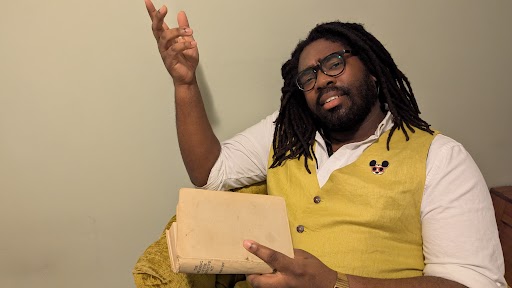
Chris Williams became a social media manager and assistant editor for Above the Law in June 2021. Prior to joining the staff, he moonlighted as a minor Memelord™ in the Facebook group Law School Memes for Edgy T14s . He endured Missouri long enough to graduate from Washington University in St. Louis School of Law. He is a former boat builder who is learning to swim and is interested in rhetoric, Spinozists and humor. Getting back in to cycling wouldn’t hurt either. You can reach him by email at christopherrashadwilliams@gmail.com and by Tweet/Bluesky at @WritesForRent.
The post Dead Lawyering Theory: Too Much Of Litigation Is Fake appeared first on Above the Law.

Social media started as a tool that would make it easier to connect you with your friends. By that I mean rate the women of your dorm by relative attractiveness, but let’s not get too granular here. The internet, known to everyone as a series of tubes, intended to serve the same purpose. By that I mean it was a handy little byproduct of the Cold War, but we don’t think about it that way. We largely think about the world wide web era of the internet as a tool that facilitates connection and discussion — it lets us access forums that replaced the need to actually know someone smart enough to help you with your problems because now, you can just be wrong in public knowing that eventually Cunningham’s Law would kick in. But good things don’t last forever.
Gauging the success of a website or post stopped being measured in how well it was received by people in favor of the much more amorphous “engagement.” And as it turns out, you don’t even really need people to engage. You can pay for bots and AI can post whatever you want while social media and the internet still appear to be populated by people even though all of the important things are happening algorithmically behind the scenes.
Dead Internet Theory may have been a fun schizoid-seeming theory in January of 2021, but it is a lot harder to take as a joke now that the majority of the internet is confirmed to be AI driven. A strange thing about death is that it spreads. As LLMs and bots kill off what’s left of the peer-to-peer interactions the web was known for, bots are playing larger roles off-line as well:
Just as the majority of online traffic being bots draws into question how social the internet is, will the legal system still be adversarial if it is really just human mediators (lawyers, judges) watching as algorithms interact with each other? Opaque sociologist and troll Jean Baudrillard spent a good chunk of his oeuvre discussing the displacement of human social interactions and meaning for algorithmic responses (he tended to use the words “code” and “simulation,” but I think you could palimpsest in algorithm where needed and come to the same conclusions), and one of the consequences is that the way we have to think about alienation changes. An excerpt from The World Without Women comes to mind:
In German, there are two apparently synonymous terms with a very significant distinction between them. “Verfremdung” means becoming other, becoming estranged from oneself — alienation in the literal sense. “Entfremdung”, by contrast, means to be dispossessed of the other, to lose all otherness. Now, it is much more serious to be dispossessed of the other than of oneself. Being deprived of the other is worse than alienation: a lethal change, by liquidation of the dialectical opposition itself. An irrevocable destabilization, that of the subject without object, of the same without other — definitive stasis and metastasis of the Same.
LLMs arguing against each other, if “other” still makes sense to say — both lawyers may have used the same system, after all — is the sort of other-dispossession that prevents adversarial conflicts from happening. What’s even the point of lawyers then? Courts act as a mediator between us little people and the awesome power of the state. But if all of the justice making gets outsourced to Claude or whatever LLM skin is en vogue, the teeth of that check and balance get worn down — especially if the state has input on the LLM’s outputs. Everyone but Elon seemed to find it ridiculous when he said that one day Grok will “render extremely compelling legal verdicts.” Grok’s reign as Mecha Hitler will hopefully be all it takes to rule out its role as a future jurist.
We aren’t at the turning point where the majority of legal worth is being done by AI programs rather than humans (I hope). We also aren’t at the point where heavy outsourcing of the work of lawyering is an accepted norm; the lawyers in this case were fined and hit with sanctions as they should have been. We also saw UC Berkeley crack down on student AI use to preempt the pedagogical dangers of alienated learning. As much as it pains me to acknowledge that Florida is doing something right, their Supreme Court just released explicit guidelines stating that lawyers can’t rely on LLMs to do the work for them and not expect to be punished. But the fight against replacement isn’t uniform. In a double blind study, law professors rated LLMs better at answering student questions than their peers. A firm in Ohio recently launched AI “clones” of several partners to help train associates. As client pressure builds for firms to adopt AI in to their workflows, reputable Biglaw firms like Sullivan & Cromwell and Gordon Rees are getting caught replacing human labor with bot responses.
This story was a story because the judge was able to detect AI citation errors, but what happens when these programs get really good at the legal equivalent of imaging hands? When LLMs get to the point that they can run through the legal arguments and properly cite actually existing authorities, what role will humans have in any of this besides paying damages and going to prison? We need to have an answer before its our reality.
Chris Williams became a social media manager and assistant editor for Above the Law in June 2021. Prior to joining the staff, he moonlighted as a minor Memelord™ in the Facebook group Law School Memes for Edgy T14s . He endured Missouri long enough to graduate from Washington University in St. Louis School of Law. He is a former boat builder who is learning to swim and is interested in rhetoric, Spinozists and humor. Getting back in to cycling wouldn’t hurt either. You can reach him by email at [email protected] and by Tweet/Bluesky at @WritesForRent.