
Last week, the Fifth Circuit resolved a random trade secrets squabble between two logistics companies over three-and-a-smidgeon relatively uneventful pages. The only wrinkle in the case was the magistrate judge’s ex parte meeting with one side, which earned a footnote’s worth of a tsk tsk.
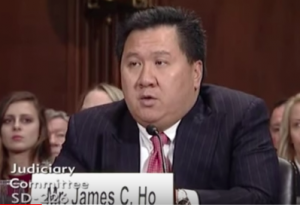
But Judge James Ho stapled four more pages onto this sucker, authoring a solo concurrence longer than the court’s opinion, to scold people for accusing judges of using their position to audition for a better job. In other words, Judge Ho hijacked an opinion to indirectly vent about how it bruises his delicate feelings when he’s accused of turning his judicial office into a relentless and desperate bid to remain MAGA Employee of the Month just in case, you know, someone retires.
In the process, Judge Ho guaranteed at least one more reason for the public to search “James Ho audition” and find the many past articles detailing his thirsty efforts.
In the instant case, the defendant’s corporate representative got tired of waiting on the magistrate judge and started emailing him directly, mentioning that he has “many friends who are . . . Texas congressmen, US representatives, and one close U.S. Senator” and might ask them to write in. This specific magistrate judge was publicly in the mix for a district court seat at the time, and responded by hauling the guy in for a private admonishment.
So the message — intended or not — was an indictment on the judge’s honor. It was effectively an accusation — fair or unfair — that the judge might be willing to use his rulings to further his own personal career ambitions.
True, but see how that’s different than suggesting that a judge is auditioning for a promotion? The judge wasn’t doing anything here other than find themselves on the wrong end of an inappropriate offer. But Judge Ho found enough of a hook in this set of facts to twist it into a story about himself:
And therein lies the quandary for the dutiful judge. How should a good judge respond when it’s suggested that his exercise of judicial authority might be tainted by his private, personal desire for elevation to another post?
Yeah… again, the magistrate judge was not accused of doing anything. Which is different than, for instance, fully reversing your publicly documented opinion on the Fourteenth Amendment to keep in line with Donald Trump. To make his point, Ho turns to “one noted scholar” — specifically Josh Blackman — and a 2025 Volokh Conspiracy post titled “The Audition Trap,” which Ho quotes at length for the proposition that accusing judges of auditioning is a charge that “cannot be refuted.”
Ho neglects mention that the subject of that blog post was… James Ho.
In 2006, Ho published a careful law review article explaining that the Fourteenth Amendment guarantees birthright citizenship, including for the children of undocumented immigrants. For the better part of two decades, Judge Ho held that opinion, which wasn’t surprising because everyone held that opinion for well over a century. Then Donald Trump came to power on a wave of nativist zeal and tried to rewrite the Constitution by executive order. Suddenly, Ho was telling an interviewer that “no one to my knowledge has ever argued that the children of invading aliens are entitled to birthright citizenship,” laying the groundwork for his cowardly two-step away from constitutional principles.
By the way, the interviewer in question was Josh Blackman.
So we’ve got a published federal appellate opinion in a case about freight brokers, citing as disinterested scholarship its author’s own character reference, written by the man whose interview of the judge served as an audition centerpiece.
No one has the power to look into another man’s heart and ascertain his actual motivations or ambitions. So the accusation of auditioning is indeed irrefutable.
Can we look into his heart to conclusively say Judge Ho decided to abandon over a 100 years of precedent and his own scholarship just for ambition? No. But we also have the original 2006 article and a working grasp of Occam’s Razor.
Public criticism is not for everyone. But if it’s too much to take, you can always resign. Federal judges receive life tenure — not a life sentence.
Or you could commandeer an unrelated judicial opinion to air your grievances! Seriously, the magistrate judge here wasn’t addressing “public criticism.” This was an ex parte tongue-lashing over inappropriate ex parte communications.
Blackman, as it happens, is on a different kick these days. He’s writing posts complaining that Ho’s colleague, Judge Leslie Southwick, is taking senior status and being replaced by Southwick’s own former clerk. Blackman finds “hereditary judicial sinecures” unsavory.
Which is true. Nothing underscores the federal bench’s slow, anti-constitutional transition to the House of Lords than judges willing their seats to favored protégés. And it keeps happening for two reasons: life tenure gives judges leverage to demand assurances over their replacement, and judges embracing the job as nakedly political, which gives the current occupant a sense of entitlement to dictate the ongoing philosophy of their seat.
But Blackman opens his recent post by recalling that in 2017 he urged Republican appointees to time their exits so Trump could fill the seats. What he didn’t understand is that judges might feel less interested in being replaced by a Republican than by their own personal brand of Republican. The conservative legal movement spent decades converting judgeships into lifetime peerages and are now scandalized by primogeniture.
Well… Blackman is. His judge took senior status long ago, so he doesn’t have a duchy to ascend to even if he wanted to. Judge Ho on the other hand probably felt just fine about the process until electoral reality smacked him in the face.
If prime judicial appointments are an inheritance, Judge Ho’s is stuck in probate. Ho clerked for Clarence Thomas and has been looked upon as a possible heir. But Thomas seems to have decided to stake everything on passing William O. Douglas as the longest-serving justice in history on May 20, 2028. Retiring the next day would leave an opening three months deeper into a presidential election year than the vacancy that Senate Republicans declared unfillable when they blew their noses with their constitutional duty and refused to take a vote on Merrick Garland. Given that Democrats will in all likelihood run the Senate by then, Thomas will be locked in for even longer. A Democratic president would likely push Ho past the prime age of selection.
So Judge Ho has to hope that he can stay atop the heap in case another seat opens up. Justice Alito, says he’s thought about leaving, though his public comments sound more like a campaign message to stir up enthusiasm for the midterms instead of something serious. Vote Republican or, maybe I quit and that seat gets held open until President AOC is exactly the sort of political theater one would expect from the guy who definitely-wasn’t-the-one-who-leaked-Dobbs.
But that seat also has its own heir presumptive in former Alito clerk Andy Oldham, who sits on the same court and wrote of Ho during an en banc fight last year, “You have to wonder what’s driving all of these gymnastics.” Perhaps the “audition” accusations are coming from inside the house!
Ho closes this concurrence advice for a good judge: apply the law consistently and “just let his record over time speak for itself.”
Oh, it has, Judge. One might even say it’s been irrefutable.
 Joe Patrice is a senior editor at Above the Law and co-host of Thinking Like A Lawyer. Feel free to email any tips, questions, or comments. Follow him on Twitter or Bluesky if you’re interested in law, politics, and a healthy dose of college sports news.
The post James Ho Uses Opinion To Whine About People Accusing Judges Of Auditioning For Promotions appeared first on Above the Law.
Last week, the Fifth Circuit resolved a random trade secrets squabble between two logistics companies over three-and-a-smidgeon relatively uneventful pages. The only wrinkle in the case was the magistrate judge’s ex parte meeting with one side, which earned a footnote’s worth of a tsk tsk.
But Judge James Ho stapled four more pages onto this sucker, authoring a solo concurrence longer than the court’s opinion, to scold people for accusing judges of using their position to audition for a better job. In other words, Judge Ho hijacked an opinion to indirectly vent about how it bruises his delicate feelings when he’s accused of turning his judicial office into a relentless and desperate bid to remain MAGA Employee of the Month just in case, you know, someone retires.
In the process, Judge Ho guaranteed at least one more reason for the public to search “James Ho audition” and find the many past articles detailing his thirsty efforts.
In the instant case, the defendant’s corporate representative got tired of waiting on the magistrate judge and started emailing him directly, mentioning that he has “many friends who are . . . Texas congressmen, US representatives, and one close U.S. Senator” and might ask them to write in. This specific magistrate judge was publicly in the mix for a district court seat at the time, and responded by hauling the guy in for a private admonishment.
So the message — intended or not — was an indictment on the judge’s honor. It was effectively an accusation — fair or unfair — that the judge might be willing to use his rulings to further his own personal career ambitions.
True, but see how that’s different than suggesting that a judge is auditioning for a promotion? The judge wasn’t doing anything here other than find themselves on the wrong end of an inappropriate offer. But Judge Ho found enough of a hook in this set of facts to twist it into a story about himself:
And therein lies the quandary for the dutiful judge. How should a good judge respond when it’s suggested that his exercise of judicial authority might be tainted by his private, personal desire for elevation to another post?
Yeah… again, the magistrate judge was not accused of doing anything. Which is different than, for instance, fully reversing your publicly documented opinion on the Fourteenth Amendment to keep in line with Donald Trump. To make his point, Ho turns to “one noted scholar” — specifically Josh Blackman — and a 2025 Volokh Conspiracy post titled “The Audition Trap,” which Ho quotes at length for the proposition that accusing judges of auditioning is a charge that “cannot be refuted.”
Ho neglects mention that the subject of that blog post was… James Ho.
In 2006, Ho published a careful law review article explaining that the Fourteenth Amendment guarantees birthright citizenship, including for the children of undocumented immigrants. For the better part of two decades, Judge Ho held that opinion, which wasn’t surprising because everyone held that opinion for well over a century. Then Donald Trump came to power on a wave of nativist zeal and tried to rewrite the Constitution by executive order. Suddenly, Ho was telling an interviewer that “no one to my knowledge has ever argued that the children of invading aliens are entitled to birthright citizenship,” laying the groundwork for his cowardly two-step away from constitutional principles.
By the way, the interviewer in question was Josh Blackman.
So we’ve got a published federal appellate opinion in a case about freight brokers, citing as disinterested scholarship its author’s own character reference, written by the man whose interview of the judge served as an audition centerpiece.
No one has the power to look into another man’s heart and ascertain his actual motivations or ambitions. So the accusation of auditioning is indeed irrefutable.
Can we look into his heart to conclusively say Judge Ho decided to abandon over a 100 years of precedent and his own scholarship just for ambition? No. But we also have the original 2006 article and a working grasp of Occam’s Razor.
Public criticism is not for everyone. But if it’s too much to take, you can always resign. Federal judges receive life tenure — not a life sentence.
Or you could commandeer an unrelated judicial opinion to air your grievances! Seriously, the magistrate judge here wasn’t addressing “public criticism.” This was an ex parte tongue-lashing over inappropriate ex parte communications.
Blackman, as it happens, is on a different kick these days. He’s writing posts complaining that Ho’s colleague, Judge Leslie Southwick, is taking senior status and being replaced by Southwick’s own former clerk. Blackman finds “hereditary judicial sinecures” unsavory.
Which is true. Nothing underscores the federal bench’s slow, anti-constitutional transition to the House of Lords than judges willing their seats to favored protégés. And it keeps happening for two reasons: life tenure gives judges leverage to demand assurances over their replacement, and judges embracing the job as nakedly political, which gives the current occupant a sense of entitlement to dictate the ongoing philosophy of their seat.
But Blackman opens his recent post by recalling that in 2017 he urged Republican appointees to time their exits so Trump could fill the seats. What he didn’t understand is that judges might feel less interested in being replaced by a Republican than by their own personal brand of Republican. The conservative legal movement spent decades converting judgeships into lifetime peerages and are now scandalized by primogeniture.
Well… Blackman is. His judge took senior status long ago, so he doesn’t have a duchy to ascend to even if he wanted to. Judge Ho on the other hand probably felt just fine about the process until electoral reality smacked him in the face.
If prime judicial appointments are an inheritance, Judge Ho’s is stuck in probate. Ho clerked for Clarence Thomas and has been looked upon as a possible heir. But Thomas seems to have decided to stake everything on passing William O. Douglas as the longest-serving justice in history on May 20, 2028. Retiring the next day would leave an opening three months deeper into a presidential election year than the vacancy that Senate Republicans declared unfillable when they blew their noses with their constitutional duty and refused to take a vote on Merrick Garland. Given that Democrats will in all likelihood run the Senate by then, Thomas will be locked in for even longer. A Democratic president would likely push Ho past the prime age of selection.
So Judge Ho has to hope that he can stay atop the heap in case another seat opens up. Justice Alito, says he’s thought about leaving, though his public comments sound more like a campaign message to stir up enthusiasm for the midterms instead of something serious. Vote Republican or, maybe I quit and that seat gets held open until President AOC is exactly the sort of political theater one would expect from the guy who definitely-wasn’t-the-one-who-leaked-Dobbs.
But that seat also has its own heir presumptive in former Alito clerk Andy Oldham, who sits on the same court and wrote of Ho during an en banc fight last year, “You have to wonder what’s driving all of these gymnastics.” Perhaps the “audition” accusations are coming from inside the house!
Ho closes this concurrence advice for a good judge: apply the law consistently and “just let his record over time speak for itself.”
Oh, it has, Judge. One might even say it’s been irrefutable.
Joe Patrice is a senior editor at Above the Law and co-host of Thinking Like A Lawyer. Feel free to email any tips, questions, or comments. Follow him on Twitter or Bluesky if you’re interested in law, politics, and a healthy dose of college sports news.