
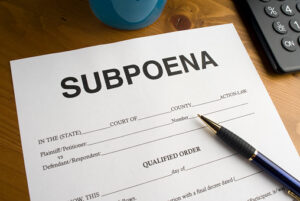
Back in July, the Justice Department came up with a new theory for winning the American Bar Association’s lawsuit over the Biglaw executive orders: get rid of the ABA’s lawyers. DOJ moved to disqualify Susman Godfrey under D.C. Rule of Professional Conduct 3.7, the lawyer-as-witness rule, arguing the firm couldn’t be both the ABA’s advocate and a fact witness in the case. The evidence that Susman was a fact witness? Mostly that DOJ had subpoenaed Susman Godfrey.
On Friday, U.S. District Judge Amir Ali denied the motion in a six-page memorandum opinion that reads like a professional responsibility answer key… and the government did not pass.
Quick refresher for anyone who hasn’t been keeping score. The ABA sued the administration in June 2025, arguing that the executive orders, plus the nine capitulating firms’ deals, added up to a coordinated campaign to intimidate the legal profession. Susman Godfrey, one of the firms hit with an executive order, and one of the four that took Trump to court and won, represents the ABA. Once discovery opened and the ABA started asking for the White House’s receipts, including communications involving Boris Epshteyn, DOJ turned around and subpoenaed the firms themselves, Susman included, for their own Epshteyn communications. Then it filed a motion arguing Susman was now too tangled up in the case to litigate it.
Rule 3.7 keeps a lawyer from acting as an advocate at trial when “the lawyer is likely to be a necessary witness.” Which raises the obvious question: which lawyer? DOJ, it turns out, had no idea.
Here, the government does not identify any lawyer at Susman Godfrey who is likely to be a necessary witness at trial. To the contrary, the government concedes it cannot identify any lawyer who fits that description.
That concession came from DOJ’s own reply brief, which the court quoted back to it: “[u]nless and until discovery has concluded, it is unclear which Susman attorneys are fact witnesses and which are only advocates.”
So the government asked a federal judge to disqualify an entire law firm under a rule about individual witnesses, without being able to name a single witness. That’s not a disqualification motion so much as a vibe.
Judge Ali kept going:
Indeed, the government does not explain which party is likely to call a Susman Godfrey lawyer as a witness or what subject that lawyer would testify about, let alone that the lawyer’s testimony would be necessary to a contested issue in the case.
Who, about what, and why it matters: the three things you’d think a motion like this would need to answer before asking a court to strip a party of its chosen counsel, a remedy the opinion, quoting precedent, describes as a “drastic measure that is disfavored by the courts.”
With no witness to point to, the government leaned on the theory from its opening brief, that Susman as an institution is so central to the story that it can’t also be counsel. That ran straight into problem number two:
The government instead resorts to general assertions that Susman Godfrey, as a firm, is a “central player” and “essential actor” in this litigation and that the ABA’s discovery into the government’s executive order targeting Susman Godfrey “effectively concedes [the law firm’s] attorneys are material fact witnesses.” … But that argument runs right into the second reason the government’s motion is unpersuasive: Rule 3.7(a) restricts representation by individual lawyers, not by their law firms. So even if the ABA identified a Susman Godfrey lawyer who was likely to be a necessary witness, the rule, by its text, would not disqualify the rest of the firm.
The comments to the rule say the same thing: “there is no general rule of imputed disqualification applicable to Rule 3.7.” The only path to taking out the whole firm runs through the general conflict-of-interest rules, 1.7 and 1.9, which the court noted the government “appears to concede” don’t apply here. And in a footnote, Judge Ali added that the rule is about trial. The D.C. Bar has said Rule 3.7 “is limited to the trial stage,” and that even a lawyer who is likely to be a necessary witness “may represent a client in most pre-trial matters.” This case is still in discovery, the trial DOJ was so worried about is, for now, hypothetical.
And then the finding that makes the whole motion look even sillier:
The court finds the lawyers representing the ABA in this case are not likely to be necessary witnesses. Indeed, based on the record before the court, none were even involved in representing Susman Godfrey in its challenge to the executive order targeting the firm and none have been involved in representing Susman Godfrey or its managing partner in response to subpoenas issued by the government in this case.
The lawyers on the ABA’s case didn’t work on Susman’s executive order fight, and they aren’t handling Susman’s response to DOJ’s subpoenas. The government’s argument boiled down to this: Susman Godfrey the institution knows things, so nobody with a Susman email address can be in the room. By that logic, getting targeted by an unconstitutional executive order disqualifies you from ever litigating against the people who wrote it. Convenient.
This is part of a pattern in DOJ’s approach to this case: fight about anything other than what the White House actually did. When the ABA asked for Epshteyn’s communications, DOJ moved to quash and then explained its subpoenas to the firms by saying the ABA should get that material from its own members. When Judge Ali ordered the government to say who drafted the executive orders, DOJ invoked the presidential communications privilege over the names themselves. And when the firm that already beat the administration once showed up as the ABA’s counsel, DOJ tried to subpoena it off the case.
Susman Godfrey has now beaten this administration in federal court twice, once over the executive order meant to cripple it and once over the motion meant to bench it, and it’s still the firm across the table as discovery inches toward the question DOJ keeps working so hard to avoid: who, exactly, was behind all this.
Full opinion available here.
Earlier: DOJ Wants Susman Godfrey Kicked Off The ABA’s Case Because DOJ Subpoenaed Susman Godfrey
The Trump Administration Says The Names Of The People Who Wrote The Biglaw Executive Orders Are A Secret
The DOJ’s Biglaw Subpoena Explanation Raises More Questions Than It Answers
Trump Turns On Capitulating Biglaw Firms HAHAHAHAHA
The ABA Wants The White House’s Receipts On The Biglaw Executive Orders
Trump Is 0-4 Defending His Biglaw Executive Orders
Trump Sued By ABA Over… Gestures At Months Of Lawlessness
Kathryn Rubino is a Senior Editor at Above the Law, host of The Jabot podcast, and co-host of Thinking Like A Lawyer. AtL tipsters are the best, so please connect with her. Feel free to email her with any tips, questions, or comments and follow her on Twitter @Kathryn1 or Bluesky @Kathryn1
The post DOJ’s Plan To Subpoena Susman Godfrey Off The ABA Case Does Not Survive Contact With A Judge appeared first on Above the Law.
Back in July, the Justice Department came up with a new theory for winning the American Bar Association’s lawsuit over the Biglaw executive orders: get rid of the ABA’s lawyers. DOJ moved to disqualify Susman Godfrey under D.C. Rule of Professional Conduct 3.7, the lawyer-as-witness rule, arguing the firm couldn’t be both the ABA’s advocate and a fact witness in the case. The evidence that Susman was a fact witness? Mostly that DOJ had subpoenaed Susman Godfrey.
On Friday, U.S. District Judge Amir Ali denied the motion in a six-page memorandum opinion that reads like a professional responsibility answer key… and the government did not pass.
Quick refresher for anyone who hasn’t been keeping score. The ABA sued the administration in June 2025, arguing that the executive orders, plus the nine capitulating firms’ deals, added up to a coordinated campaign to intimidate the legal profession. Susman Godfrey, one of the firms hit with an executive order, and one of the four that took Trump to court and won, represents the ABA. Once discovery opened and the ABA started asking for the White House’s receipts, including communications involving Boris Epshteyn, DOJ turned around and subpoenaed the firms themselves, Susman included, for their own Epshteyn communications. Then it filed a motion arguing Susman was now too tangled up in the case to litigate it.
Rule 3.7 keeps a lawyer from acting as an advocate at trial when “the lawyer is likely to be a necessary witness.” Which raises the obvious question: which lawyer? DOJ, it turns out, had no idea.
Here, the government does not identify any lawyer at Susman Godfrey who is likely to be a necessary witness at trial. To the contrary, the government concedes it cannot identify any lawyer who fits that description.
That concession came from DOJ’s own reply brief, which the court quoted back to it: “[u]nless and until discovery has concluded, it is unclear which Susman attorneys are fact witnesses and which are only advocates.”
So the government asked a federal judge to disqualify an entire law firm under a rule about individual witnesses, without being able to name a single witness. That’s not a disqualification motion so much as a vibe.
Judge Ali kept going:
Indeed, the government does not explain which party is likely to call a Susman Godfrey lawyer as a witness or what subject that lawyer would testify about, let alone that the lawyer’s testimony would be necessary to a contested issue in the case.
Who, about what, and why it matters: the three things you’d think a motion like this would need to answer before asking a court to strip a party of its chosen counsel, a remedy the opinion, quoting precedent, describes as a “drastic measure that is disfavored by the courts.”
With no witness to point to, the government leaned on the theory from its opening brief, that Susman as an institution is so central to the story that it can’t also be counsel. That ran straight into problem number two:
The government instead resorts to general assertions that Susman Godfrey, as a firm, is a “central player” and “essential actor” in this litigation and that the ABA’s discovery into the government’s executive order targeting Susman Godfrey “effectively concedes [the law firm’s] attorneys are material fact witnesses.” … But that argument runs right into the second reason the government’s motion is unpersuasive: Rule 3.7(a) restricts representation by individual lawyers, not by their law firms. So even if the ABA identified a Susman Godfrey lawyer who was likely to be a necessary witness, the rule, by its text, would not disqualify the rest of the firm.
The comments to the rule say the same thing: “there is no general rule of imputed disqualification applicable to Rule 3.7.” The only path to taking out the whole firm runs through the general conflict-of-interest rules, 1.7 and 1.9, which the court noted the government “appears to concede” don’t apply here. And in a footnote, Judge Ali added that the rule is about trial. The D.C. Bar has said Rule 3.7 “is limited to the trial stage,” and that even a lawyer who is likely to be a necessary witness “may represent a client in most pre-trial matters.” This case is still in discovery, the trial DOJ was so worried about is, for now, hypothetical.
And then the finding that makes the whole motion look even sillier:
The court finds the lawyers representing the ABA in this case are not likely to be necessary witnesses. Indeed, based on the record before the court, none were even involved in representing Susman Godfrey in its challenge to the executive order targeting the firm and none have been involved in representing Susman Godfrey or its managing partner in response to subpoenas issued by the government in this case.
The lawyers on the ABA’s case didn’t work on Susman’s executive order fight, and they aren’t handling Susman’s response to DOJ’s subpoenas. The government’s argument boiled down to this: Susman Godfrey the institution knows things, so nobody with a Susman email address can be in the room. By that logic, getting targeted by an unconstitutional executive order disqualifies you from ever litigating against the people who wrote it. Convenient.
This is part of a pattern in DOJ’s approach to this case: fight about anything other than what the White House actually did. When the ABA asked for Epshteyn’s communications, DOJ moved to quash and then explained its subpoenas to the firms by saying the ABA should get that material from its own members. When Judge Ali ordered the government to say who drafted the executive orders, DOJ invoked the presidential communications privilege over the names themselves. And when the firm that already beat the administration once showed up as the ABA’s counsel, DOJ tried to subpoena it off the case.
Susman Godfrey has now beaten this administration in federal court twice, once over the executive order meant to cripple it and once over the motion meant to bench it, and it’s still the firm across the table as discovery inches toward the question DOJ keeps working so hard to avoid: who, exactly, was behind all this.
Full opinion available here.
Earlier: DOJ Wants Susman Godfrey Kicked Off The ABA’s Case Because DOJ Subpoenaed Susman Godfrey
The Trump Administration Says The Names Of The People Who Wrote The Biglaw Executive Orders Are A Secret
The DOJ’s Biglaw Subpoena Explanation Raises More Questions Than It Answers
Trump Turns On Capitulating Biglaw Firms HAHAHAHAHA
The ABA Wants The White House’s Receipts On The Biglaw Executive Orders
Trump Is 0-4 Defending His Biglaw Executive Orders
Trump Sued By ABA Over… Gestures At Months Of Lawlessness
Kathryn Rubino is a Senior Editor at Above the Law, host of The Jabot podcast, and co-host of Thinking Like A Lawyer. AtL tipsters are the best, so please connect with her. Feel free to email her with any tips, questions, or comments and follow her on Twitter @Kathryn1 or Bluesky @Kathryn1