
Right about now, Todd Blanche is giving off the worst kind of try hard vibes. The former Cadwalader partner who gave up a Biglaw partnership to become Donald Trump’s personal criminal defense attorney is serving as acting attorney general, and he’s been doing everything in his considerable power to make that “acting” designation go away. In just the past few weeks alone, he indicted James Comey for posting a picture of sea shells, then went on television to pretend he barely knew anything about it (prompting Comey to, likely inadvertently, throw shade his way); he went on Meet the Press and revealed, with great confidence, that restaurants check your ID at the door; he announced an indictment of the Southern Poverty Law Center that was so sloppily constructed it was missing basic elements of the charged crime; and he has bent over backward to keep the Epstein files from public view at every turn. The throughline in all of it is the same: whatever Donald Trump wants, Todd Blanche is there to provide it — consequences, legal coherence, and institutional norms be damned. Today’s announcement that the DOJ is coming after reporters who covered national security stories is just the latest entry on an increasingly long list.
When Blanche posted on X this morning that reporters who received classified leaks should “not be surprised” to receive subpoenas, it landed with the weight of a man who has been methodically testing the limits of what this DOJ can do to people who inconvenience the president, and finding that the limits are further out than anyone previously assumed.
The post is worth reading in full: “To the media asking about DOJ investigating the leaking of classified information: Prosecuting leakers who share our nation’s secrets with reporters, in turn risking our national security and the lives of our soldiers, is a priority for this administration. Any witness, whether a reporter or otherwise, who has information about these criminals should not be surprised if they receive a subpoena about the illegal leaking of classified material.”
The subpoenas are not hypothetical. Yesterday, the Wall Street Journal reported Blanche is on the receiving end of pressure from Donald Trump about leaks to the media. The Journal also revealed it got the subpoena treatment back in March for its February reporting on the start of the Iran war. The backstory the Journal pieced together is telling: Trump privately complained to Blanche about media leaks in the wake of the Iran war, Blanche vowed to secure subpoenas specifically targeting reporters who had worked on sensitive national security stories, and in one meeting, Trump passed Blanche a stack of news articles he considered threatening to national security with a sticky note attached that said “treason.” The DOJ has been reportedly meeting with the Pentagon on the investigations.
That is not a description of an independent law enforcement decision. That is a description of a president handing his acting attorney general a homework assignment.
Bruce Brown, president of the Reporters Committee for Freedom of the Press, put the policy shift in its proper historical context: “Historically, the Justice Department has used subpoenas to news organizations in leak cases as a last resort and only after exhausting investigative efforts targeted at non-media sources.” What Blanche is doing is not that. Theodore Boutrous, Jr., a prominent First Amendment lawyer representing the New York Times in a separate lawsuit against the Pentagon over press access, was equally direct, telling the Journal, grand jury subpoenas “seek to invade directly into the reporter’s relationship with sources and the newsgathering process, which is meant to allow the American people to get information about the government.”
The Wall Street Journal’s parent company Dow Jones issued a statement from chief communications officer Ashok Sinha, “The government’s subpoenas to The Wall Street Journal and our reporters represent an attack on constitutionally protected newsgathering. We will vigorously oppose this effort to stifle and intimidate essential reporting.”
None of this happens in isolation. This is the same acting attorney general who told a room full of white-collar lawyers that the DOJ monitors their public commentary for consistency with the administration’s preferred narrative, who declared “war” on judges who rule against the administration, who has bent over backward to keep the Epstein files from public view, and who fired off a letter to a Foley Hoag attorney the morning after a shooting demanding they drop a lawsuit because the president wanted a ballroom built. The pattern is not subtle. The Justice Department under Blanche is not an independent law enforcement institution making prosecutorial judgments based on the facts and the law. It is, as we have documented at considerable length, an instrument of the president’s personal and political preferences.
The DOJ spokesperson offered the department’s standard non-answer: “In all circumstances, the Department of Justice follows the facts and applies the law to identify those committing crimes against the United States.” Well, the facts and the law, *and* a sticky note saying “treason.”

Kathryn Rubino is a Senior Editor at Above the Law, host of The Jabot podcast, and co-host of Thinking Like A Lawyer. AtL tipsters are the best, so please connect with her. Feel free to email her with any tips, questions, or comments and follow her on Twitter @Kathryn1 or Bluesky @Kathryn1
The post The DOJ Is Coming For Reporters. Todd Blanche Just Said So Out Loud. appeared first on Above the Law.
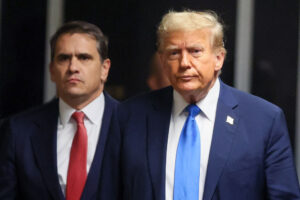
Right about now, Todd Blanche is giving off the worst kind of try hard vibes. The former Cadwalader partner who gave up a Biglaw partnership to become Donald Trump’s personal criminal defense attorney is serving as acting attorney general, and he’s been doing everything in his considerable power to make that “acting” designation go away. In just the past few weeks alone, he indicted James Comey for posting a picture of sea shells, then went on television to pretend he barely knew anything about it (prompting Comey to, likely inadvertently, throw shade his way); he went on Meet the Press and revealed, with great confidence, that restaurants check your ID at the door; he announced an indictment of the Southern Poverty Law Center that was so sloppily constructed it was missing basic elements of the charged crime; and he has bent over backward to keep the Epstein files from public view at every turn. The throughline in all of it is the same: whatever Donald Trump wants, Todd Blanche is there to provide it — consequences, legal coherence, and institutional norms be damned. Today’s announcement that the DOJ is coming after reporters who covered national security stories is just the latest entry on an increasingly long list.
When Blanche posted on X this morning that reporters who received classified leaks should “not be surprised” to receive subpoenas, it landed with the weight of a man who has been methodically testing the limits of what this DOJ can do to people who inconvenience the president, and finding that the limits are further out than anyone previously assumed.
The post is worth reading in full: “To the media asking about DOJ investigating the leaking of classified information: Prosecuting leakers who share our nation’s secrets with reporters, in turn risking our national security and the lives of our soldiers, is a priority for this administration. Any witness, whether a reporter or otherwise, who has information about these criminals should not be surprised if they receive a subpoena about the illegal leaking of classified material.”
The subpoenas are not hypothetical. Yesterday, the Wall Street Journal reported Blanche is on the receiving end of pressure from Donald Trump about leaks to the media. The Journal also revealed it got the subpoena treatment back in March for its February reporting on the start of the Iran war. The backstory the Journal pieced together is telling: Trump privately complained to Blanche about media leaks in the wake of the Iran war, Blanche vowed to secure subpoenas specifically targeting reporters who had worked on sensitive national security stories, and in one meeting, Trump passed Blanche a stack of news articles he considered threatening to national security with a sticky note attached that said “treason.” The DOJ has been reportedly meeting with the Pentagon on the investigations.
That is not a description of an independent law enforcement decision. That is a description of a president handing his acting attorney general a homework assignment.
Bruce Brown, president of the Reporters Committee for Freedom of the Press, put the policy shift in its proper historical context: “Historically, the Justice Department has used subpoenas to news organizations in leak cases as a last resort and only after exhausting investigative efforts targeted at non-media sources.” What Blanche is doing is not that. Theodore Boutrous, Jr., a prominent First Amendment lawyer representing the New York Times in a separate lawsuit against the Pentagon over press access, was equally direct, telling the Journal, grand jury subpoenas “seek to invade directly into the reporter’s relationship with sources and the newsgathering process, which is meant to allow the American people to get information about the government.”
The Wall Street Journal’s parent company Dow Jones issued a statement from chief communications officer Ashok Sinha, “The government’s subpoenas to The Wall Street Journal and our reporters represent an attack on constitutionally protected newsgathering. We will vigorously oppose this effort to stifle and intimidate essential reporting.”
None of this happens in isolation. This is the same acting attorney general who told a room full of white-collar lawyers that the DOJ monitors their public commentary for consistency with the administration’s preferred narrative, who declared “war” on judges who rule against the administration, who has bent over backward to keep the Epstein files from public view, and who fired off a letter to a Foley Hoag attorney the morning after a shooting demanding they drop a lawsuit because the president wanted a ballroom built. The pattern is not subtle. The Justice Department under Blanche is not an independent law enforcement institution making prosecutorial judgments based on the facts and the law. It is, as we have documented at considerable length, an instrument of the president’s personal and political preferences.
The DOJ spokesperson offered the department’s standard non-answer: “In all circumstances, the Department of Justice follows the facts and applies the law to identify those committing crimes against the United States.” Well, the facts and the law, *and* a sticky note saying “treason.”
Kathryn Rubino is a Senior Editor at Above the Law, host of The Jabot podcast, and co-host of Thinking Like A Lawyer. AtL tipsters are the best, so please connect with her. Feel free to email her with any tips, questions, or comments and follow her on Twitter @Kathryn1 or Bluesky @Kathryn1